
Leasehold vs Freehold Explained: What’s the Difference?
When buying a property in the UK, one of the biggest decisions you may face is whether the home is leasehold or freehold. While these terms are commonly used in the property industry, many buyers are unsure of what they actually mean, and how ownership, responsibilities and costs differ between the two.
Understanding the difference between leasehold and freehold is essential before purchasing a property, managing a building, or making decisions about your long-term ownership.
It's easy to assume that leasehold and freehold simply describe who owns a property. In reality, the type of ownership affects everything from who is responsible for repairs to how maintenance is funded and how decisions are made about the building.
At POD Management, we regularly speak to homeowners who aren't sure what their lease says, why they pay a service charge or who is responsible for maintaining communal areas. Understanding the basics of leasehold and freehold ownership can help you make informed decisions, ask the right questions and avoid common misunderstandings.
Here, we take a closer look at leasehold vs freehold, what each type of ownership means, and the key differences every property owner should know.
What is a Freehold Property?
A freehold property means you own both the building and the land it stands on outright. As a freeholder, you have ownership of the property indefinitely, with no time limit attached. You are generally responsible for maintaining the property, arranging repairs and managing any associated costs.
For example, if you buy a freehold house, you typically own the house, garden and the land beneath it.
Key features of freehold ownership:
You own the property and the land permanently
There is no lease expiry date
You are responsible for maintenance and repairs
You usually do not pay ground rent
You have greater control over decisions affecting the property
Freehold ownership is most common for houses, although some flats can also be freehold depending on the ownership structure.
What is a Leasehold Property?
A leasehold property means you own the right to occupy a property for a set period of time, but you do not own the land it stands on. The property itself is owned by a freeholder (also known as the landlord). The leaseholder purchases the right to live in or use the property for the length of the lease agreement.
Leasehold properties are particularly common for flats and apartments, where multiple residents contribute towards the upkeep of communal areas such as roofs, gardens, lifts and entrances.
Key features of leasehold ownership:
You own the property for the length of the lease
The land and building structure are owned by the freeholder
You must follow the terms of the lease agreement
You may pay service charges and ground rent
You share responsibility for maintaining communal areas
Leaseholders have legal rights and protections, but they also have responsibilities outlined within their lease.
Leasehold vs Freehold: The Difference Between Them
The main difference between leasehold and freehold ownership is what you own and for how long you own it.
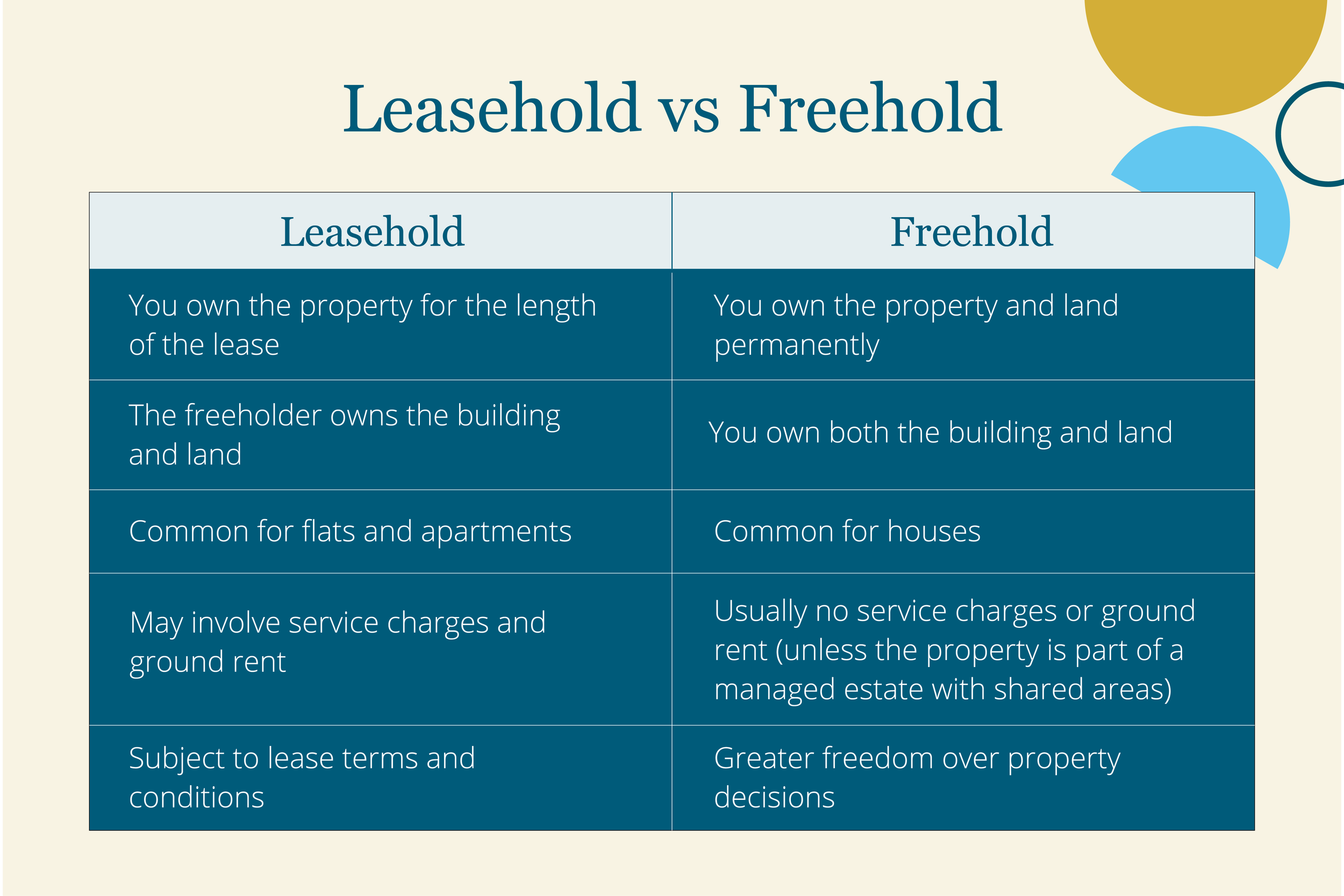
In summary: with leasehold you own the property for a fixed period, while someone else owns the land and wider building while with freehold you own the property and land outright.
Is Leasehold Better than Freehold?
Whether leasehold or freehold is better depends on your circumstances, the type of property and how it is managed.
Leasehold properties can offer advantages, particularly for people buying flats. Shared ownership of communal areas means maintenance responsibilities are divided between residents, and professional property management companies can help coordinate repairs, insurance and building upkeep. However, leaseholders need to consider and understand their lease terms and ongoing costs, including service charges and potential major works.
Freehold ownership offers greater control and certainty, but owners are responsible for all maintenance, repairs and costs associated with the property. Neither option is automatically better, as it depends on each individual. The important thing is understanding the responsibilities that come with each type of ownership. Because leasehold legislation and guidance continue to evolve, it’s always worth checking the latest position and reviewing your lease terms before making decisions.
What Costs do Leaseholders and Freeholders Pay?
One of the biggest differences between leasehold and freehold ownership is how property costs are managed.
Leasehold costs may include:
Service charges for maintaining shared areas
Building insurance contributions
Ground rent (where applicable)
Costs for major works or improvements
Service charges are used to maintain and manage communal parts of a building, such as cleaning, repairs, landscaping, lift maintenance and safety checks.
One of the biggest misconceptions we encounter is that service charges are simply an ‘extra bill’. In reality, service charges fund the day-to-day running, maintenance and long-term upkeep of a building, helping to protect both residents and the value of their homes.
At POD Management, transparency is central to how we manage developments. We believe leaseholders should understand what they're paying for, why costs have been incurred and how funds are being used. That's why clear communication, detailed budgeting and proactive financial management are key parts of our approach.
Freehold costs may include:
Repairs and maintenance
Building insurance
Improvements and renovations
Garden and external upkeep
While freeholders generally avoid service charges, they take full responsibility for managing and funding the property.
What Happens When a Lease Expires?
A common question from buyers is: “What happens when a lease runs out?” A lease gives a leaseholder the right to occupy a property for a specific period. Many modern leases are granted for very long terms (often 125 or 999 years), so ‘expiry’ is not usually an immediate concern, but it’s still important to understand your remaining lease length and plan ahead. As the lease gets shorter, the property can become more difficult to sell and may decrease in value.
Many leaseholders choose to extend their lease before it becomes too short. The process can involve legal and valuation considerations, so seeking professional advice is often recommended. Understanding your lease length is an important part of owning a leasehold property.
Do Leaseholders Own Their Property?
Yes, leaseholders do own their property, but their ownership is different from freehold ownership. A leaseholder owns the right to occupy and use the property for the agreed lease term. They also have legal rights as a property owner, including rights relating to building management, service charges and communication with the freeholder or managing agent.
However, ownership is governed by the lease agreement, which sets out responsibilities for both the leaseholder and freeholder.
How Does POD Management Support Leaseholders and Freeholders?
Owning a leasehold property shouldn't feel complicated, but understanding responsibilities, service charges and building management can sometimes be overwhelming.
At POD, we work with leaseholders, freeholders, resident management companies and developers to make property management clearer, more transparent and easier to navigate.
Our approach focuses on:
Clear communication so residents understand what's happening in their building.
Transparent service charge management, with budgets and expenditure explained wherever possible.
Proactive maintenance planning to help protect buildings and reduce unexpected costs.
Responsive customer support, giving all residents confidence that questions and concerns are addressed promptly.
Professional compliance and governance, ensuring developments are managed in line with current legislation and best practice.
We believe that effective property management is about more than maintaining buildings, but about building trust and maintaining relationships with the people who live there.
Before You Buy: What to Check
If you’re buying a leasehold or freehold property, it’s worth checking a few key details early on to avoid surprises later. These quick checks can help you understand your responsibilities, likely costs, and how the building or estate is managed.
Remaining lease length (leasehold): Shorter leases can affect resale value and mortgage options, so it’s important to know how many years are left.
Ground rent: Check the amount, when it’s reviewed, and whether there are any escalation clauses.
Service charge and what it covers:Ask for the most recent service charge budget/accounts and a clear breakdown of what’s included.
Planned major works and reserve funds:Find out whether any significant works are anticipated and whether there is a reserve/sinking fund in place to help manage future costs.
Who manages the building or estate:Clarify whether the property is managed by the freeholder, a resident management company (RMC), a Right to Manage (RTM) company, or a managing agent, and how residents can raise queries or report issues.
Leasehold vs Freehold: The Key Takeaway
Understanding the difference between leasehold and freehold is the first step towards making informed property decisions. Whether you're buying your first flat, moving into a managed development or simply looking to better understand your rights as a leaseholder, knowing how ownership works can help you avoid confusion later on.
At POD Management, we're committed to making living easier through transparent communication, proactive property management and clear guidance for residents. If you'd like to learn more about leasehold ownership, service charges or building management, explore our blog page, where you can find expert advice on the topics that matter most.
For more information, get in touch with our team today:
Email us at relationships@podmanagement.co.uk
Call us on 0333 577 6656
We look forward to hearing from you!
Disclaimer: The information provided in this blog is intended for general guidance only and should not be relied upon as a substitute for legal advice. Information was correct at the time of publication.