
Once a residential development is handed over, the responsibility for keeping it running smoothly doesn't disappear. From maintaining essential building systems to overseeing contractors, managing compliance and supporting residents, there's a considerable amount of work involved in protecting a development long after completion.
For residents, much of this happens out of sight. They simply expect the entrance gates to open, the communal areas to be clean, the lift to work and any parcels waiting for them to be safely received by the concierge. And why wouldn't they? These are everyday expectations when living in a professionally managed residential development.
But what if we told you that every part of this seemingly straightforward experience involves a considerable amount of work?
At POD Management, we refer to this as the iceberg effect. What residents see is only a small proportion of what a managing agent actually does. Beneath the surface is a continuous programme of maintenance, inspections, compliance checks, contractor management and planning, all designed to keep buildings safe, functional and well maintained.
So, why don't you see your managing agent more often? Quite simply, because when property management is working, much of this work happens behind the scenes, so residents don’t have to think about every detail. But that doesn’t mean it should be invisible: residents and clients should be able to ask questions and understand what is being done.
A Seamless Resident Experience Doesn't Happen by Chance
Consider the journey home at a development with a concierge and shared facilities. You arrive at your development, pass through the electric gates, park your car, collect a parcel from reception and take the lift to your floor. Everything works as expected, and you make your way home without giving it a second thought. However, each stage involves responsibilities that sit firmly within residential property management.
The gates need to be inspected and assessed to ensure they are safe and operational. Parking arrangements must be coordinated, while parcels need to be received and residents notified. Lifts require regular servicing and safety inspections, and communal corridors must be maintained.
Then there are the things you are even less likely to notice. Are the fire alarms working? Has the emergency lighting been checked? Are the necessary fire safety records available? Are smoke ventilation systems, where installed, inspected and maintained in line with the building’s fire strategy?
These are just some of the considerations that go into managing a residential building effectively.
In our Beyond What You See video, CEO David Goldberg takes viewers through a typical resident journey and highlights the work taking place at every stage.
The Iceberg Effect: What Does a Managing Agent Actually Do?
The visible aspects of property management are only a fraction of the overall responsibility. Much of a managing agent's most important work happens in the background, often long before a resident notices a problem.
For developers, understanding these responsibilities is particularly important when appointing a residential managing agent to oversee a development beyond handover.
Just some of this work includes:
Planned preventative maintenance (PPM): Scheduling regular maintenance to identify potential issues early, prevent avoidable deterioration and reduce the likelihood of costly repairs.
Health and safety compliance: Coordinating inspections, checks and records to help ensure buildings meet their relevant safety and legal obligations.
Contractor management: Checking contractors have the appropriate experience, qualifications and insurance before appointing them to carry out work.
Asset inspections: Monitoring essential building equipment and infrastructure, including lifts, gates, access systems and emergency lighting.
Building insurance: Supporting or coordinating insurance arrangements where this forms part of the managing agent’s responsibilities.
Issue management: Recording, monitoring and following up on maintenance concerns to ensure they are properly addressed.
Record-keeping and reporting: Maintaining records of inspections, actions and outstanding issues to support accountability and provide information when needed.
Staff training: Equipping teams with the knowledge and skills they need to support residents and respond appropriately to unexpected situations.
The services and costs covered will vary depending on the development and the terms of the lease. For more information, visit our Service Charge FAQs.
Individually, these responsibilities might seem relatively small but collectively, they form the foundation of effective residential property management. Good property management goes beyond simply completing tasks; it requires understanding of what needs to happen, when it needs to happen, and having the oversight to ensure everything is delivered effectively.
What Does Your Service Charge Actually Pay For?
One of the common misconceptions surrounding property management is that service charges primarily pay for what residents can physically see.
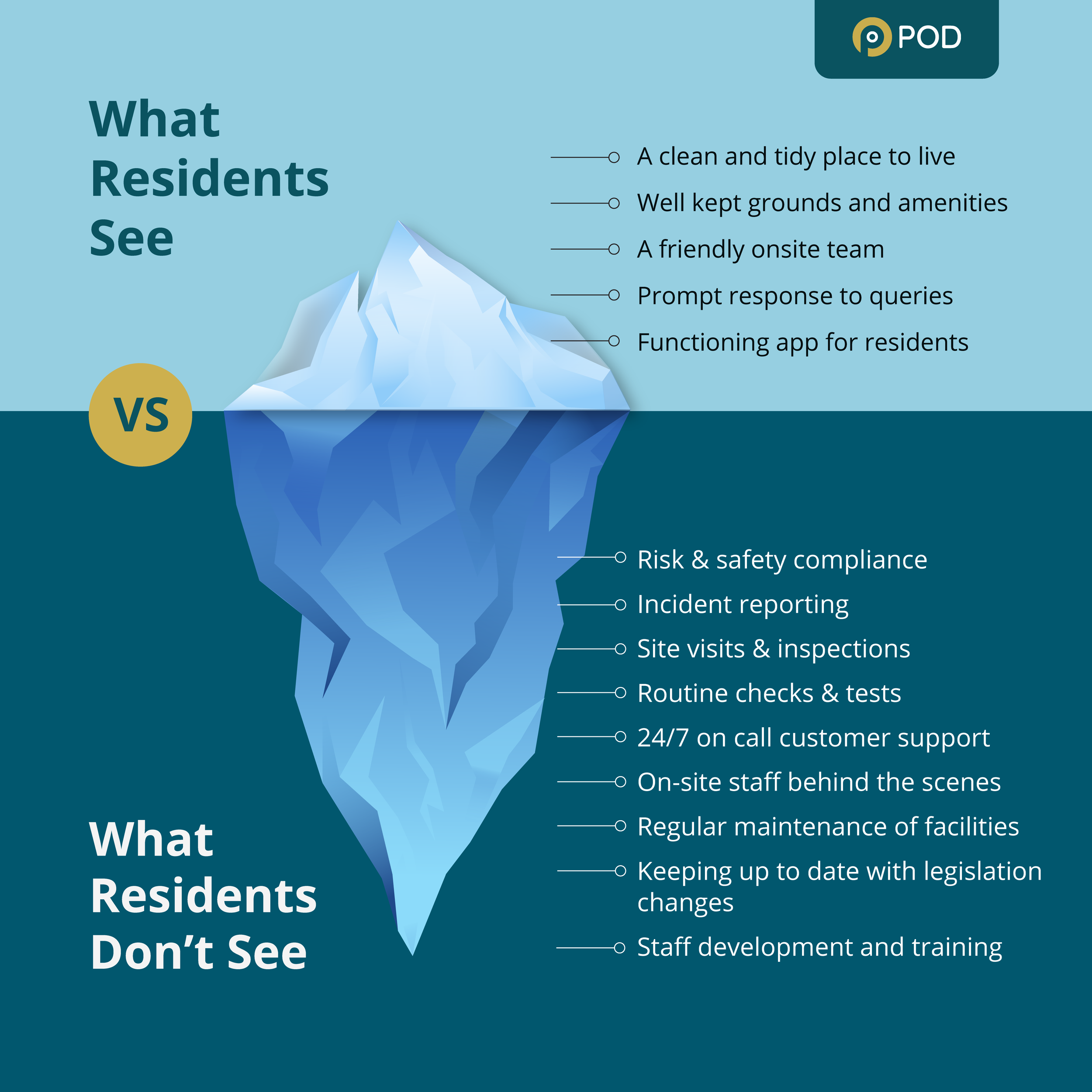
While cleaning, gardening, repairs and communal maintenance are all important, service charges also contribute towards the less visible responsibilities involved in running a development.
This includes maintenance planning, building inspections, safety and compliance activities, contractor oversight, insurance and the day-to-day management needed to coordinate everything effectively.
In other words, residents aren't simply paying for a building that looks presentable. They're contributing towards the ongoing work required to keep it safe, operational and properly maintained.
This is why transparency matters. Residents should be able to understand what their service charges contribute towards, while developers should have confidence that their developments are being looked after properly beyond handover.
A professional managing agent should be able to demonstrate what work has been completed, what is planned and how outstanding issues are being managed. The work might happen behind the scenes, but the evidence and accountability should always be accessible.
Why Good Property Management Should Be Proactive, Not Reactive
There is a fundamental difference between a managing agent that simply responds when something goes wrong and one that actively works to prevent problems from arising in the first place.
A proactive approach means understanding the condition of a building, anticipating maintenance requirements, keeping track of compliance responsibilities and ensuring contractors are equipped to do their jobs properly.
It also means taking ownership. When an issue is identified, it should be recorded, monitored and followed through to resolution, rather than left for someone else to pick up.
At POD Management, we believe that knowing exactly what is happening across the developments we manage is fundamental to delivering this level of service. We focus on visibility, accountability and taking a considered approach to building management, helping to protect both the resident experience and the long-term condition of the asset.
For developers, choosing the right managing agent is therefore about looking beyond the day-to-day service. It's about finding a partner who understands the responsibilities involved, takes them seriously and can demonstrate how they are being delivered.
A proactive property management company can also help identify potential issues before they develop into more significant problems, supporting the long-term maintenance, safety and condition of a development. This is particularly important when considering the ongoing responsibilities that come with managing a building after practical completion and handover.
You Don't Need to See the Work to Know It's Being Done
Ultimately, residents want to enjoy their homes without having to worry about everything happening around them. They want to know that their building is safe, that essential systems work and that someone will take responsibility when something needs attention. That's the point of good property management.
Like having your car serviced, you don't need to oversee every individual check to appreciate the importance of the work. You simply want the reassurance that it has been done properly.
For developers, that reassurance comes from knowing they've appointed a managing agent with the experience, processes and commitment to look after their development long after handover.
The best residential property management might not always be visible, but it should always be felt in the experience of living in a well-run building.
Get In Touch With POD Management
At POD Management, our mission is simple: well-run, safe buildings where we exceed expectations.
If you're a developer looking for a managing agent who takes ownership, plans ahead and understands what it takes to look after a residential development, we’d love to help you. Talk to our team today:
Fill out our business enquiry form
Email us at relationships@podmanagement.co.uk
Call us on 0333 577 6656